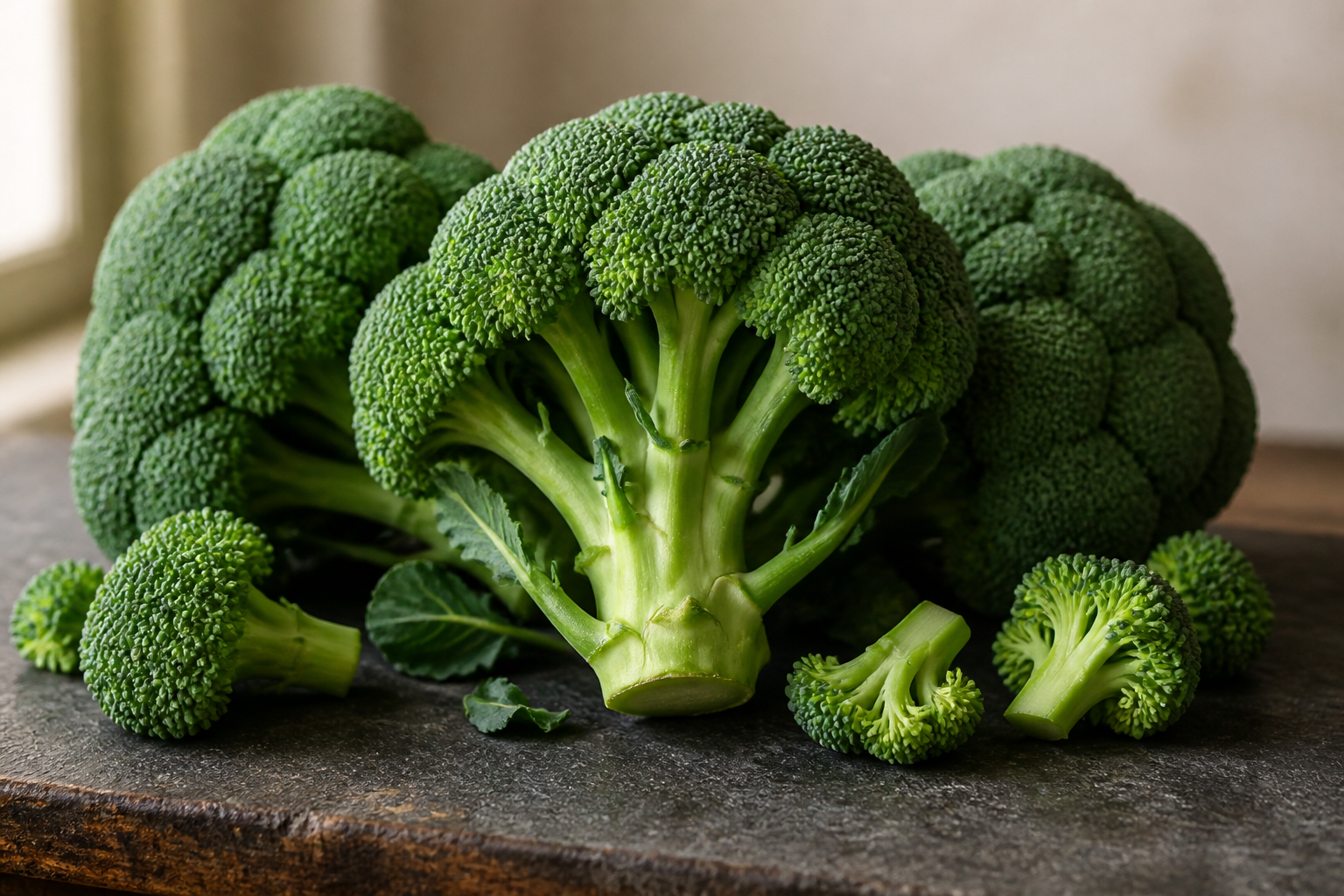
Broccoli is one of the foods that makes people pause when they first read the Dr. Sebi food list.
Broccoli is usually presented as one of the healthiest vegetables you can eat. That makes its absence from Dr. Sebi's nutritional guide surprising at first.
The confusion makes sense.
Broccoli is not processed junk. It is not a candy bar. It is not soda. In conventional nutrition, broccoli is widely treated as a nutritious vegetable.
But Dr. Sebi was not building his food list around the conventional definition of healthy. His framework was different: alkaline, electric, natural, mineral-rich, and compatible with the body according to his methodology.
Within that framework, broccoli did not make the list. [1]
The short answer
Broccoli is not on Dr. Sebi's nutritional guide.
The usual Sebian explanation is that broccoli is a hybrid or cultivated vegetable, and Dr. Sebi preferred foods he considered more natural, electric, and less altered.
Botanically, broccoli belongs to Brassica oleracea, the same species behind several familiar vegetables, including cabbage, cauliflower, kale, Brussels sprouts, collards, and kohlrabi. Broccoli itself is commonly classified as Brassica oleracea var. italica. [2]
That does not mean broccoli is the same thing as a modern GMO crop.
It means broccoli is part of a long history of domestication and selective breeding. Humans selected certain traits over time, especially the edible flower buds and stalks that broccoli is grown for. [2] [3]
That distinction matters. Dr. Sebi's concern was not only "lab-made food." His concern was broader: he believed heavily altered, hybridized, or unnatural foods did not have the same relationship with the body as foods he considered natural and electric.
Why broccoli confuses people
Broccoli sits in an awkward place because it is rejected in the Sebian framework but respected in mainstream nutrition.
That is where beginners get stuck.
Compared with fried food, refined sugar, or fast food, broccoli obviously looks like the better choice. But when the goal is to follow Dr. Sebi's guide strictly, the question changes.
The question is not, "Is broccoli generally healthy?"
The question is, "Is broccoli on the nutritional guide?"
For Dr. Sebi followers, that answer is no.
The official Dr. Sebi nutritional guide lists approved vegetables such as avocado, bell peppers, cucumber, dandelion greens, kale, lettuce except iceberg, mushrooms except shiitake, okra, olives, sea vegetables, squash, tomato varieties, watercress, and zucchini. Broccoli is not listed. [1]
That is the practical issue. If the goal is to eat from the guide, broccoli needs to be replaced.
Why kale can be approved while broccoli is not
This is the part that throws people off.
Kale and broccoli are both connected to Brassica oleracea. So why would kale appear on the guide while broccoli does not?
The honest answer is that Dr. Sebi's food list is not a botany chart.
It is a selected guide based on his own methodology. He was not simply rejecting every domesticated plant or every member of a botanical group. He was choosing foods he believed fit his alkaline, electric, mineral-rich framework.
That is why the list can include kale but exclude broccoli. It can include some grains but exclude others. It can include seeded fruits but avoid seedless versions.
The logic is internal to the Sebian system.
You do not have to turn that into mainstream nutrition advice to understand it. You just have to read the food list as a specific methodology, not a general health ranking.
What to use instead
The easiest way to replace broccoli is to think about what you used it for.
Most people use broccoli for one of four reasons:
- Something green on the plate
- Something hearty in a stir fry
- Something to add to soups or stews
- Something quick to steam on the side
There is no exact approved copy of broccoli. But there are approved foods that can do the same job in a meal.
If you want something green
Use watercress, dandelion greens, turnip greens, wild arugula, kale, or approved lettuce.
Watercress gives you that sharp green bite. Wild arugula works well in salads and bowls. Dandelion greens are more bitter, but they make sense with lime, onion, peppers, and a little sea salt.
If you are new to this, start with the greens you can actually find and eat consistently.
If you want something for stir fries
Use chayote, zucchini, mushrooms, peppers, onions, or squash.
Chayote is one of the better texture swaps because it holds up when cooked. Zucchini is easier to find and cooks quickly. Mushrooms bring depth if the meal feels too light.
A pan of zucchini, mushrooms, onion, pepper, sea salt, cayenne, and thyme can do a lot of the work people expect broccoli to do in a stir fry.
It will not taste like broccoli. It does not need to.
If you want something for soups or stews
Use squash, okra, mushrooms, turnip greens, or zucchini.
Squash gives body. Okra thickens things naturally. Mushrooms add deeper flavor. Greens can be added near the end so they do not disappear completely into the pot.
For a beginner stew, squash and okra are a good pair. Add onion, peppers, sea salt, cayenne, and herbs, then serve it with quinoa or wild rice if you need the meal to be more filling.
If you just need an easy side
Use cucumber with lime, sauteed zucchini, wild arugula salad, avocado, or lightly cooked greens.
Not every side needs to be cooked. Sometimes the easiest approved side is cucumber, lime, and sea salt. Or avocado with cayenne. Or a quick wild arugula salad with onion and lime.
The point is to have another default ready.
If broccoli used to be convenient, the replacement needs to be convenient too.
The practical takeaway
Broccoli is not on Dr. Sebi's food list, so if you are trying to eat strictly from the guide, replace it rather than trying to make it fit.
Use greens when you want something fresh. Use chayote or zucchini when you want texture. Use squash, okra, or mushrooms when you want a meal to feel more filling.
That is enough to start.
Pick the closest approved swap, season it well, and keep cooking from the guide.