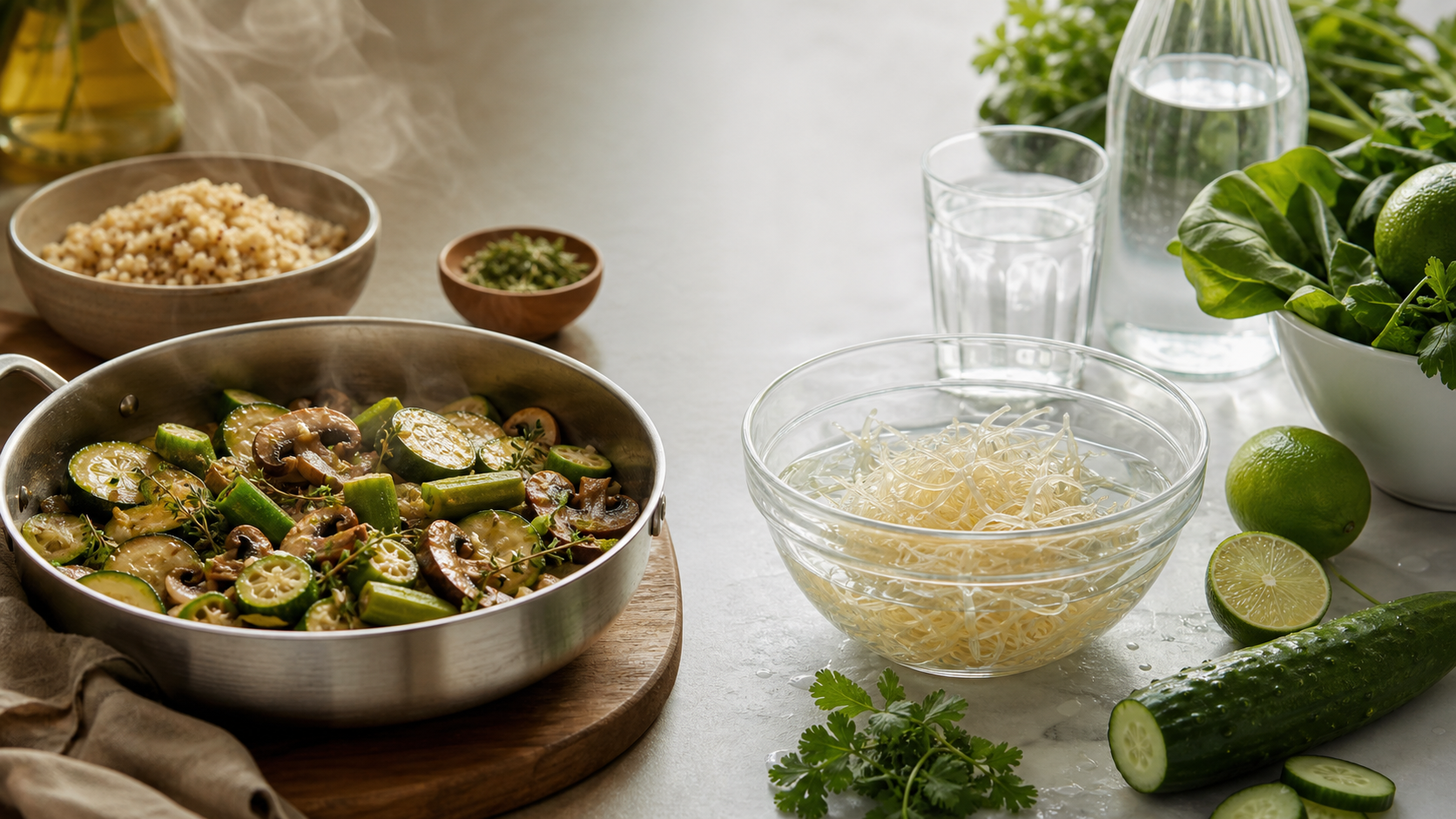
A common mistake is treating the food list like the whole answer. The ingredient may be approved, but the final meal still depends on how it is prepared.
But in the Sebian lifestyle, preparation changes the question. An approved food can still be cooked, stored, seasoned, or processed in a way that pulls it away from the reason people call it electric in the first place.
That does not mean you need to become extreme about raw food or avoid cooked meals.
It means the way you handle the food matters.
Electric food is about condition too
In Dr. Sebi's methodology, electric foods are usually understood as natural, alkaline, mineral-bearing foods that have not been heavily altered or processed. Official Dr. Sebi Cell Food material still frames the nutritional guide around approved plant foods, herbs, spring water, sea vegetables, and avoiding processed or mucus-forming foods. [1]
That is why preparation matters. You are not only choosing an ingredient. You are deciding what condition that ingredient reaches your body in.
Fresh mango is one condition. Mango boiled down with sweetener into syrup is another. Sea moss rinsed, soaked, and blended into gel is one condition. Sea moss cooked hard until it smells burnt and then hidden in a sugary drink is another.
Water changes the preparation
Water is easy to overlook because it disappears into the food. But grains, teas, sea moss gel, soups, and stews all depend on water.
If spring water is part of the Sebian approach, then the water used in preparation matters too. It becomes part of the meal, not just a cooking tool.
This is especially true when the liquid is consumed.
If you make herbal tea, the water is the carrier. If you simmer a stew, the cooking liquid holds flavor and some of what leaves the vegetables. If you make sea moss gel, the water becomes part of the gel itself.
The practical rule is simple: use the best water you reasonably can for anything the food absorbs or anything you will drink.
Heat is not the enemy
Electric food does not have to mean raw food.
Amaranth, quinoa, fonio, teff, wild rice, mushrooms, squash, okra, and stronger greens are usually cooked. Heat can make food softer, more useful, and easier to repeat. If cooked meals keep you consistent, they have value.
The real issue is excessive heat and wasteful cooking.
Long boiling can move minerals and water-soluble nutrients into the cooking water. That does not make the food useless, but throwing away the liquid may throw away part of what you were trying to keep. [2]
That is why soups and stews make more sense than boiling vegetables flat and draining them. If the liquid is part of the dish, less is wasted.
Think less about "raw versus cooked" and more about "gentle versus harsh."
Processing is where approved foods can lose the point
This part matters: approved ingredients can still be pushed into the same processed-food pattern the guide is trying to move away from.
Walnuts can become a simple sauce, or they can become the base of a heavy fake cheese you eat with every meal. Approved grains can become a warm bowl, or they can become fried snack food.
The problem is not creativity. The problem is when the food is being pushed so hard into imitation that the meal becomes another processed substitute.
Electric food should still feel like food.
If the preparation needs five tricks, three binders, a frying pan full of oil, and a processed seasoning blend to make it satisfying, step back.
Storage affects freshness
Fresh food changes after it is cut, cooked, blended, or stored. Sea moss gel can spoil. Cut fruit loses freshness. Cooked grains dry out or sour. Herbs fade. Oils go stale.
That does not mean you should cook every meal from scratch. It means batch cooking should be realistic. Make enough to help your week, but not so much that the food sits past its best.
For a Sebian kitchen, freshness is part of quality.
Seasoning can help or undo the meal
Good seasoning makes this lifestyle easier. Onion, peppers, thyme, basil, oregano, dill, cayenne, lime, ginger, cloves, and sea salt can carry a simple meal.
The issue is not flavor. The issue is what you use to get it.
Many seasoning blends bring in starches, sugar, anti-caking agents, artificial flavors, preservatives, or ingredients that are not on the guide. That is one way processed food gets back into the kitchen.
Read the label before you trust the front of the bottle.
A better question to ask
"Is this approved?" is only the first question.
The next question is: "What did I do to it?"
Did you soak it, rinse it, cook it gently, season it cleanly, and eat it while it was still fresh? Or did you overcook it, drain it, fry it, store it too long, and cover it with processed flavor?
That is the real impact of preparation. It brings the focus back to the food itself: its freshness, its water, its minerals, its texture, and how close the final meal stays to the reason you chose it.