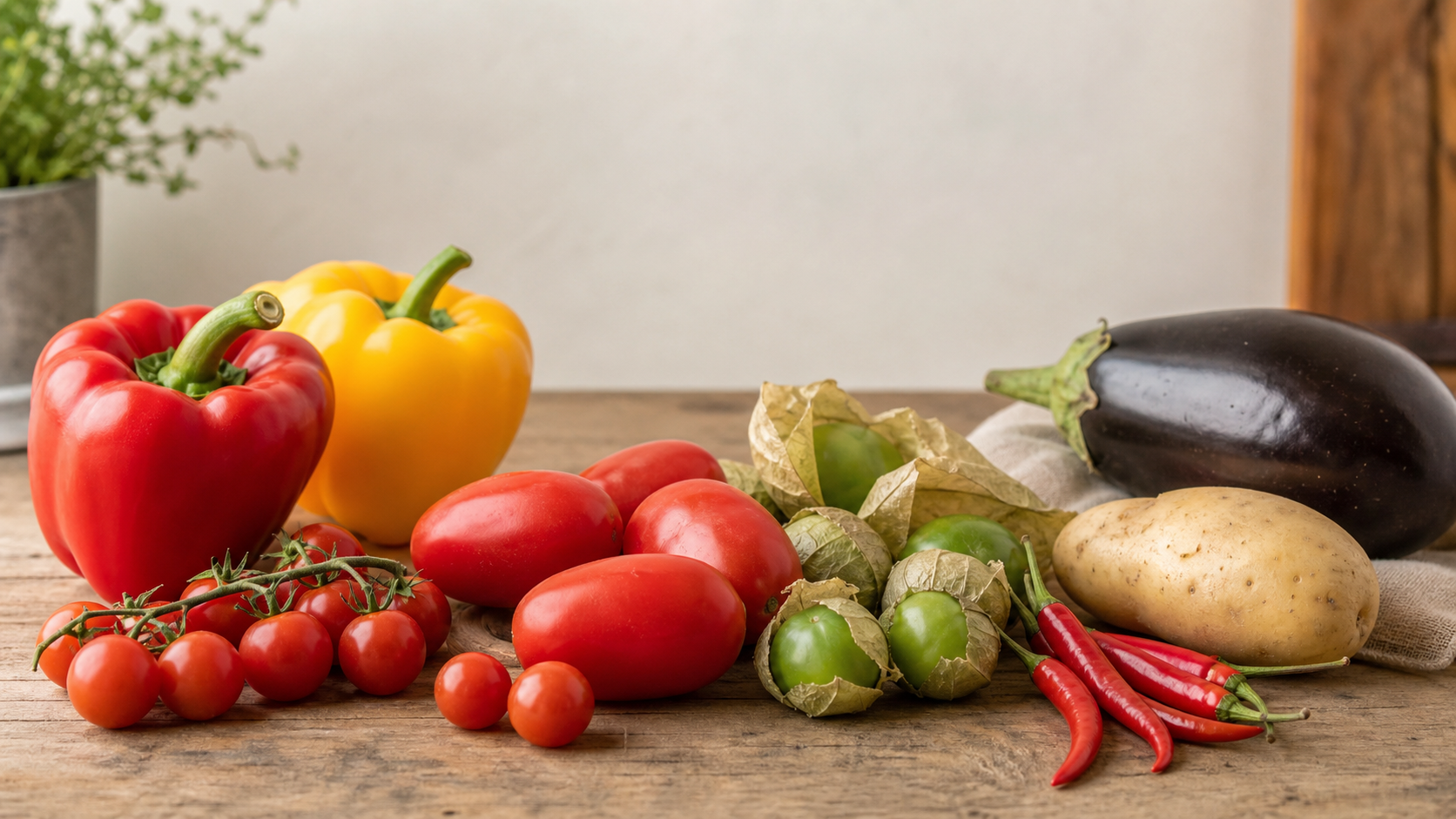
Nightshade foods can be confusing when you are trying to follow Dr. Sebi's food list.
In other diet spaces, you may hear people talk about avoiding nightshades completely. Then you open the Dr. Sebi food list and see bell peppers, cayenne pepper, African bird pepper, cherry tomatoes, plum tomatoes, and tomatillo.
So the question is fair: if those foods are nightshades, why are some allowed?
What are nightshade foods?
Nightshade foods come from the Solanaceae family, also called the nightshade or potato family. This plant family includes many different species, from familiar food crops to poisonous plants. [1]
Common edible nightshades include potatoes, tomatoes, eggplant, bell peppers, chili peppers, and tomatillos. [1] [2]
That does not mean they are all used the same way. A white potato, tomato, bell pepper, cayenne pepper, and eggplant share a plant family, but they do very different jobs in a meal.
Why nightshades confuse people
The confusion usually comes from mixing two different systems.
In some wellness circles, nightshades are discussed as a group to avoid. That is not the same thing as Dr. Sebi's food list.
The usual concern is that nightshades contain natural plant compounds called alkaloids. Some people believe these compounds may irritate digestion or aggravate symptoms for sensitive individuals, especially in autoimmune or anti-inflammatory diet approaches. That is different from saying every nightshade is harmful for every person.
There is also a more concrete concern with potatoes: green, damaged, or sprouted potatoes can contain higher levels of glycoalkaloids, including solanine. That is one reason food-safety sources warn against eating potatoes in that condition. [3]
Dr. Sebi did not simply remove every plant in a certain botanical family. His guide includes some foods from the nightshade family and excludes others. So if you apply a blanket "no nightshades" rule, you may remove foods that are actually on the nutritional guide.
Do not treat nightshade as a Sebian category
This is the main point: nightshade is not a Sebian food-list category.
The Dr. Sebi food list is organized around foods he considered natural, alkaline, electric, and compatible with his methodology. It is not a botany chart.
That is why the list can include bell peppers and cayenne pepper while leaving out white potatoes and eggplant.
The better question is, "Is this specific food on the guide?"
Which nightshades are on the food list?
Several nightshade foods do appear on the Dr. Sebi food list.
Bell peppers
Bell peppers are listed as approved vegetables on the food list. [4]
They are useful because they bring sweetness, color, and crunch to salads, grain bowls, stews, and sauteed vegetables.
Cayenne pepper and African bird pepper
Cayenne pepper and African bird pepper are also on the guide. [4]
They matter because simple approved meals need flavor. Use clean single-ingredient spices when possible. A bottle labeled "chili seasoning" or "spicy blend" may include paprika, sugar, starch, anti-caking agents, or other ingredients that are not on the guide.
Cherry tomatoes and plum tomatoes
The food list does not treat every tomato the same. It lists cherry tomatoes and plum tomatoes specifically. [4]
That means a stricter Sebian approach would use those approved tomato varieties instead of treating every large tomato, canned tomato product, or commercial tomato sauce as approved.
Tomatillo
Tomatillo is also listed on the food list. [4]
It can work in sauces, stews, and cooked vegetables, especially when you want a bright, tart flavor.
Which common nightshades are not on the food list?
Some familiar nightshade foods are not on Dr. Sebi's guide.
White potatoes
White potatoes are nightshades, but they are not on the Dr. Sebi food list.
If you wanted something filling, use approved grains like quinoa, amaranth, fonio, teff, or wild rice. If you wanted something soft and hearty in a stew, use squash, chayote, okra, or garbanzo beans.
Eggplant
Eggplant is another common nightshade that is not on the guide.
If you used eggplant for softness and body, try mushrooms, zucchini, squash, or chayote instead.
Standard large tomatoes
The guide names cherry tomatoes and plum tomatoes. It does not give a blanket approval to every tomato variety or every tomato product. [4]
So if you are trying to be strict, do not assume a large slicing tomato, canned tomato sauce, tomato paste, ketchup, or restaurant salsa fits the list just because tomatoes are mentioned.
Paprika and seasoning blends
Paprika usually comes from dried peppers, so people often assume it belongs with approved peppers. But paprika itself is not listed on the guide.
The same caution applies to chili powder, taco seasoning, Cajun seasoning, barbecue rubs, and hot sauce. Even when the flavor starts with peppers, the final product may include vinegar, sugar, starch, citric acid, preservatives, or other ingredients outside the guide.
What to use instead
The easiest way to replace unapproved nightshades is to think about the job they were doing in the meal.
If you used potatoes
Use approved grains when you need the meal to feel filling.
Quinoa, amaranth, fonio, teff, and wild rice can become a base for vegetables, herbs, avocado, peppers, and lime. For soups and stews, squash, garbanzo beans, okra, and chayote can give more body.
If you used eggplant
Use mushrooms, zucchini, chayote, or squash.
Mushrooms bring depth. Zucchini cooks quickly. Chayote holds more texture. Squash gives body and softness.
If you used tomato sauce
Use cherry tomatoes or plum tomatoes and make a simple sauce yourself.
Cook them down with onion, bell pepper, herbs, sea salt, and a little water. The goal is not to copy commercial tomato sauce exactly. The goal is to build a clean sauce from foods on the list.
If you used paprika or chili blends
Use cayenne pepper, African bird pepper, onion powder, herbs, lime, and sea salt.
Read labels carefully. The front of the bottle tells you the flavor. The ingredient list tells you whether it fits.
The practical takeaway
Do not remove every nightshade just because you heard that word somewhere else.
If you are following Dr. Sebi's food list, follow the actual list. Bell peppers, cayenne pepper, African bird pepper, cherry tomatoes, plum tomatoes, and tomatillo are listed. White potatoes, eggplant, paprika, and broad tomato products are not.
Use the approved nightshades simply, replace the ones that are not on the guide, and keep building meals from the list instead of importing rules from another diet.