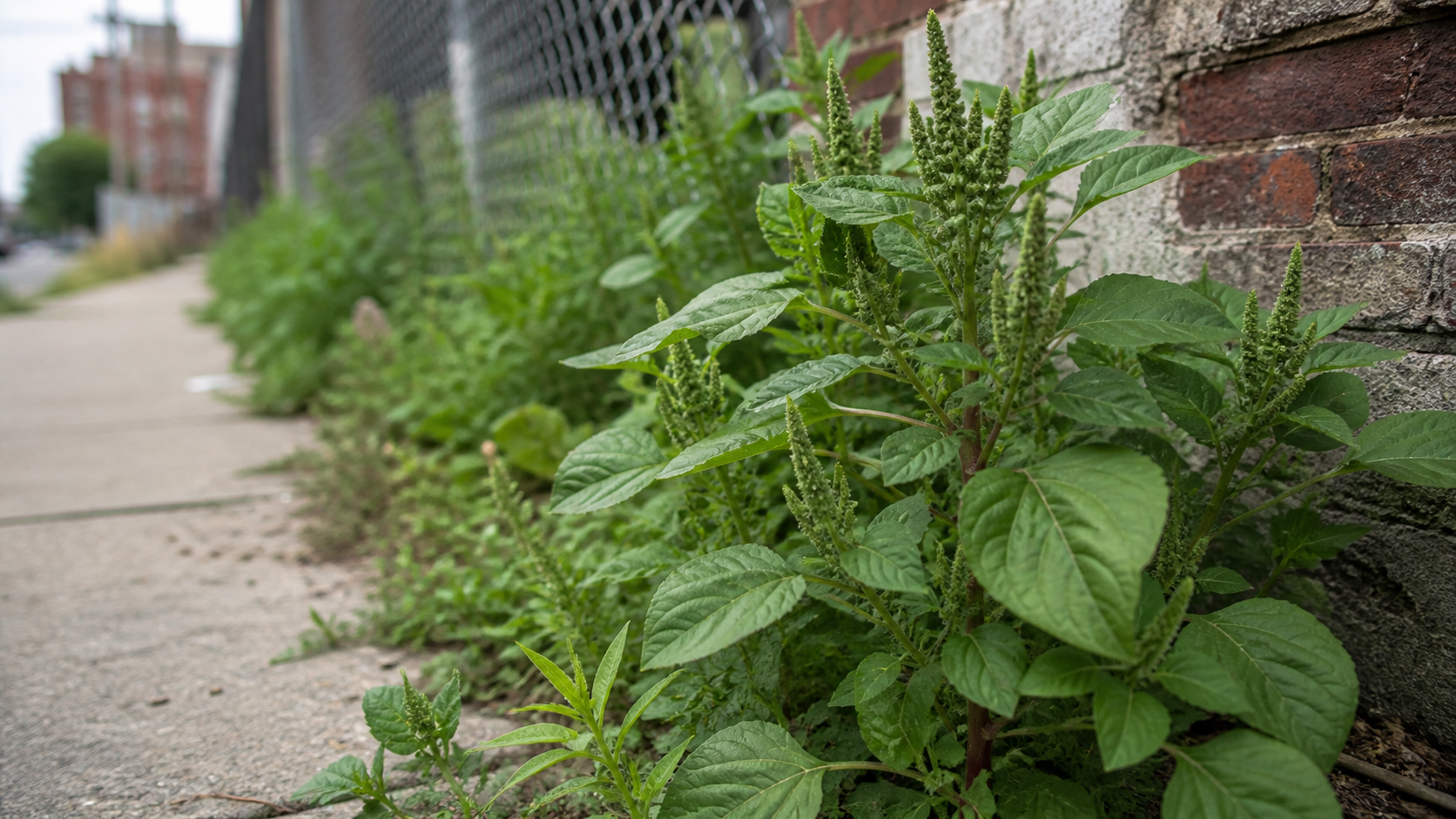
Most people who follow Dr. Sebi's food list know amaranth as a grain.
That makes sense. Amaranth grain is one of the easier approved grains to understand. You can cook it into porridge, use it as a warm base, or rotate it with quinoa, fonio, teff, and wild rice.
But amaranth is not only a grain conversation.
The leaves matter too.
Wild amaranth greens are eaten in many parts of the world, often under names like amaranth greens, pigweed, callaloo, Chinese spinach, bayam, or mchicha depending on the region and species.
For a Sebian kitchen, that makes them interesting. They sit at the meeting point of wild greens, mineral-rich plants, traditional food cultures, and practical cooking.
The short answer
Amaranth greens are the edible leaves of plants in the Amaranthus genus.
Some amaranths are grown for grain. Some are grown for leaves. Some grow as common weeds in gardens, fields, sidewalks, disturbed soil, and urban spaces. Extension sources often discuss pigweeds as common Amaranthus weeds across the United States, especially in agriculture and home gardens. [1] [2]
That is the thing I noticed in the video too: once you learn what amaranth looks like, you start seeing it everywhere.
In the Sebian lifestyle, wild amaranth greens fit the broader interest in:
- Leafy greens
- Mineral-rich plants
- Traditional foods
- Less commercialized vegetables
- Food that grows close to the land
The important part is identification. Amaranth may be common, but no one should eat a wild plant unless they are sure what it is and know the area has not been sprayed or contaminated.
Amaranth grain and amaranth greens are different in the kitchen
Amaranth grain and amaranth greens come from the same broader plant family, but they are not used the same way.
Amaranth grain is cooked like a small seed or grain. It works in porridge, bowls, and warm meals.
Amaranth greens are cooked like leafy greens.
You can use them more like:
- Callaloo
- Spinach
- Dandelion greens
- Turnip greens
- Kale
- Other cooked wild greens
The site food data already treats amaranth and amaranth green as separate ingredients, which is the right way to think about them. Amaranth grain is a grain base. Amaranth green is a leafy green used in salads, cooked vegetables, soups, and stews. [3]
Why wild greens matter in the Sebian lifestyle
Dr. Sebi's food philosophy was never only about removing foods.
It was also about learning what to replace them with.
That is where wild greens become useful. They push people beyond the normal supermarket rotation of broccoli, spinach, romaine, and bagged salad.
Wild or traditional greens often carry more cultural memory than commercial vegetables. People have cooked amaranth leaves across the Caribbean, Africa, Asia, and the Americas. The World Vegetable Center describes amaranth as an underused crop that is increasing in popularity both as a grain and as a leafy vegetable. [4]
That does not mean every wild green is automatically Sebian-approved.
It means the mindset fits: learn real plants, use mineral-rich greens, and understand food beyond what is packaged neatly in the store.
The names can get confusing
Amaranth greens go by different names depending on where you are.
You may hear:
- Amaranth greens
- Wild amaranth
- Pigweed
- Callaloo
- Chinese spinach
- Bayam
- Mchicha
- Slender amaranth
- Redroot pigweed
The names do not always map perfectly.
Callaloo is a good example. In some Caribbean contexts, callaloo can refer to amaranth leaves. In other places, it can refer to taro leaves or other greens used in a similar dish.
Pigweed is also broad. It can refer to several Amaranthus species, and extension guides often separate redroot pigweed, smooth pigweed, Powell amaranth, Palmer amaranth, waterhemp, and other related species. [5]
So the name is a clue, not enough by itself.
The plant still needs to be identified properly.
Wild amaranth in urban spaces
One thing I wanted to show in the video is how easy wild amaranth can be to find once you know what you are looking at.
That matches how many extension sources talk about pigweeds. These plants often appear in disturbed soil: gardens, field edges, lots, sidewalks, neglected beds, and other places where the ground has been opened up. [1] [2]
In other words, amaranth is not rare in many parts of the United States.
In the agricultural world, that can make it a problem weed. In a food culture context, it also explains why so many communities learned to cook the leaves.
How to identify it safely
This section needs to stay practical.
Amaranth species can vary, but extension identification guides often look at features such as leaf shape, stem hairiness, plant height, petiole length, flower heads, and whether the plant is upright or prostrate. [5]
Common clues may include:
- Alternating leaves along the stem
- Green or reddish stems depending on species
- Small green flower clusters or spikes
- Rapid summer growth
- A habit of appearing in disturbed soil, gardens, lots, and field edges
Those clues are not enough to eat from.
Before harvesting wild amaranth, use a regional plant guide, a local extension source, or someone experienced with edible plants in your area. Avoid plants growing near roadsides, sprayed lawns, industrial lots, polluted soil, or anywhere pets and runoff may be an issue.
This is one of the few places where caution belongs in the article. Wild food is only useful if you know exactly what you are picking.
How to cook amaranth greens
Amaranth greens are usually cooked simply.
Young leaves tend to be more tender. Older leaves and stems can be tougher and may need more cooking.
A basic Sebian-style preparation could be:
- Rinse the greens well.
- Remove tough stems if needed.
- Saute onion and peppers in a little approved oil or water.
- Add the greens and cook until softened.
- Season with sea salt, cayenne, thyme, basil, or another approved herb.
- Finish with lime if you want brightness.
They also work in soups and stews.
Add them near the end if you want them to keep some texture. Cook them longer if you want them softer, closer to callaloo-style greens.
What they taste like
Amaranth greens are usually mild, earthy, and green-tasting.
Some varieties are spinach-like. Some are slightly bitter. Young leaves are usually easier for beginners because they are more tender and less intense.
If you already like cooked greens, amaranth greens are not hard to understand.
They pair well with:
- Onion
- Peppers
- Cayenne
- Thyme
- Basil
- Lime
- Sea salt
- Squash
- Mushrooms
- Quinoa
- Wild rice
- Amaranth grain
The useful thing about greens like this is that they do not need much. A pan, some seasoning, and a grain base is enough.
Nutrition and mineral value
Amaranth leaves are eaten as a leafy vegetable in many cultures and can contribute minerals, vitamins, fiber, and plant compounds depending on the species and growing conditions.
USDA-linked food data for amaranth leaves lists nutrients including calcium, iron, magnesium, potassium, vitamin A activity, vitamin C, and folate. [6]
That mineral angle is why amaranth greens fit the Sebian conversation so naturally.
They are not just "weeds." They are edible greens with a long food history.
Oxalates and cooking
Like spinach and some other leafy greens, amaranth leaves can contain oxalates. Levels vary by species, growing conditions, and preparation. Cooking methods such as boiling or blanching can reduce soluble oxalates in some leafy vegetables, though minerals and water-soluble nutrients can also move into the cooking water. [7]
That does not mean amaranth greens are a problem for everyone.
It means preparation matters.
If you are eating wild greens often, vary your greens and learn how each one is usually prepared in traditional cooking.
How it fits the food list
Amaranth grain is already familiar in Sebian circles.
Amaranth green also appears in this site's food data as a leafy green, with uses such as salad, cooked vegetable, soup, and stew. [3]
The wider point is that amaranth greens fit the spirit of the Sebian kitchen: mineral-rich greens, traditional plants, simple cooking, and food that does not need to be manufactured into something else.
If you are buying them from a market, treat them like any other leafy green.
If you are foraging them, identification and location come first.
A practical way to use them
Start simple.
Cook amaranth greens the way you would cook other strong greens:
- With onion, peppers, and herbs
- In soup with squash or mushrooms
- Alongside quinoa, fonio, or wild rice
- Mixed with other approved greens
- As a cooked side with lime and sea salt
Do not make it complicated.
Learn the plant. Cook it cleanly. Use it as one more green in the Sebian kitchen.
Sources and further reading
- [1] Penn State Extension: Managing Pigweed in the Home Garden
- [2] Missouri WeedID: Prostrate Pigweed
- [3] Sebi Guide Food List: Amaranth and Amaranth Green
- [4] World Vegetable Center: Amaranthus Germplasm Collection
- [5] Cornell CALS: How to Identify Pigweeds
- [6] University Hospitals: Amaranth Leaves Nutrition Facts
- [7] Journal of Agricultural and Food Chemistry: Effects of cooking on soluble and insoluble oxalates