The first week is easier when you keep the job small.
After discovering Dr. Sebi and opening the food list, it is easy to start worrying about every edge case. Is this fruit seeded enough? Is this brand of water right? Should I be fasting? Should I be taking herbs? What about cleansing?
Most of that can wait.
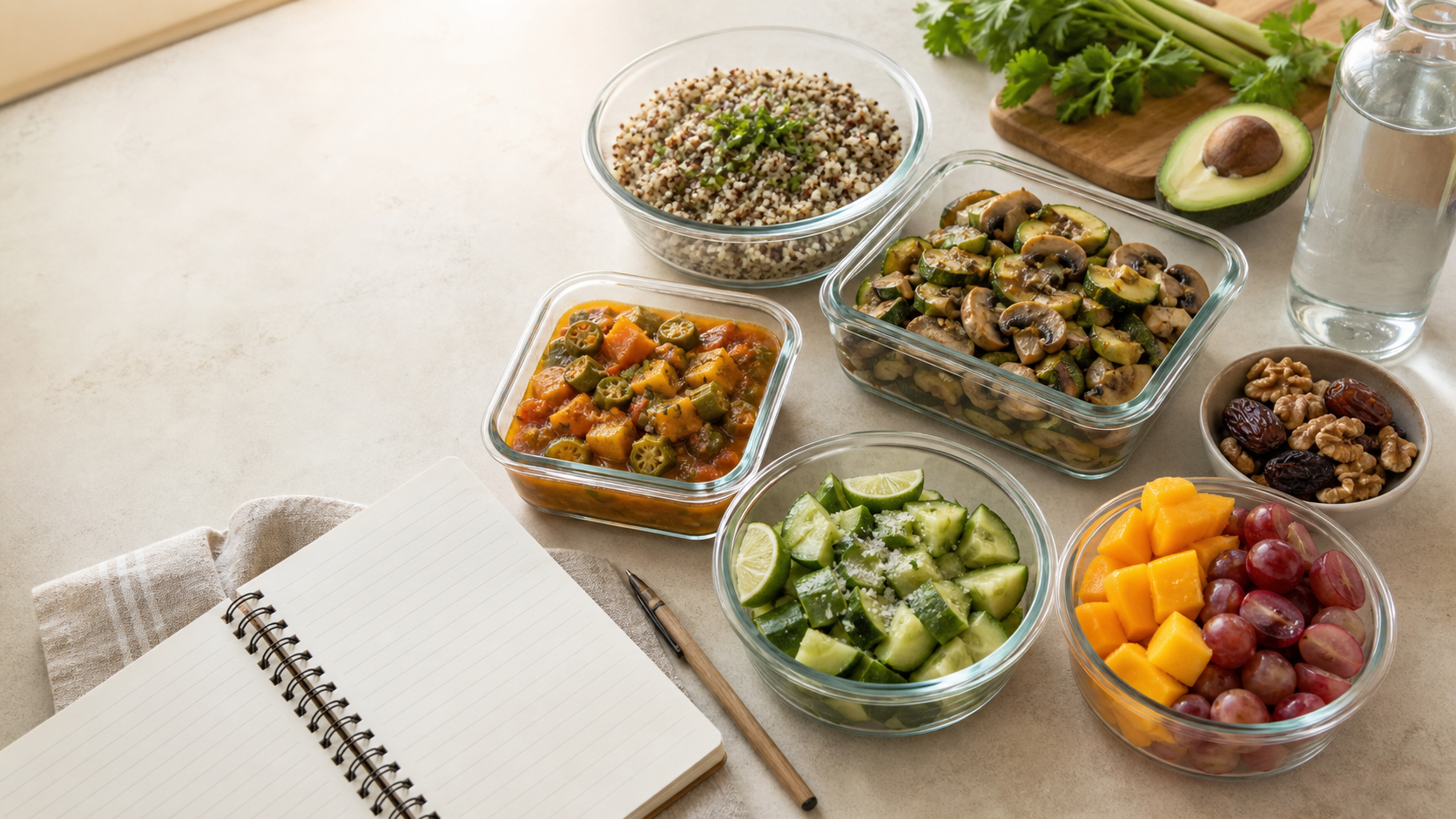
Your first job is simpler: build one week of eating you can actually repeat using approved foods from the Dr. Sebi food list.
Not a perfect week. Not a cleanse. Not a complicated version of the lifestyle. Just a working week.
If you can get through one week with simple meals, more water, and enough food in the house to avoid last-minute decisions, you have something useful. Then you can run that week again and improve one part.
The goal: one repeatable week
The goal is not to prove how disciplined you are. It is to get familiar with the rhythm of eating this way: shopping differently, cooking differently, snacking differently, and drinking water instead of whatever you usually reach for.
Start with this:
- One breakfast you can repeat.
- One lunch you can repeat or pack.
- Two dinners you can cook without making a project out of it.
- A few snacks that give you approved options between meals.
- More plain water than you were drinking before. If you can use spring water, use it. If not, start by making soda and sweet drinks less normal.
That is enough for the first week.
Breakfast
Pick one breakfast you can repeat without thinking too hard:
- Fruit: mango, seeded grapes, pears, peaches, berries, melon, or whatever approved fruit you can buy consistently.
- Porridge: quinoa or amaranth with dates, burro banana if you use it, or a little agave.
- Smoothie: approved fruit with water and sea moss gel if that is already part of your routine.
If fruit alone leaves you hungry, use a heavier breakfast with quinoa, teff, amaranth, fonio, hemp seeds, or burro banana.
Quick breakfasts when you do not want to cook
These are useful when breakfast needs to be quick or easy to carry.
Mango Jelly
DrinkToasted Sesame Milk
DrinkToasted Black Sesame Milk
Filling breakfasts when fruit is not enough
Use these when you need something warmer or heavier than fruit.
Ancient Grain Quinoa Pancakes Sweet or Savory
MainBlueberry Spelt Waffles
MainCrispy Green Banana Hash - Green Banana Stir Fry
Lunch
Lunch should be built around food you can carry, reheat, or assemble quickly. This is where leftovers help.
Good beginner lunches:
- Quinoa with avocado, cucumber, onion, peppers, lime, sea salt, and herbs.
- A salad with greens, walnuts, fruit, and a simple dressing.
- Leftover vegetables and grains from the night before.
- Wild rice with cooked vegetables and approved seasonings.
The main thing is to avoid being stuck at work, school, or out running errands with no approved food and no plan.
Lunches you can pack
Look for lunches that can hold up in a container and still make sense cold or at room temperature.
Chickpea Savory Pancakes Wraps
MainChickpea soft flatbread
MainGluten Free Alkaline Flatbread
Quick plates when you are home
These are better when you can assemble or heat something quickly.
Hotel Veggie Fajitas
MainZucchini Fritters
MainSteamed Veggies Stuffed Avocado and Fajita
Dinner
Dinner still needs to feel like a real meal. Start with familiar meal shapes.
A good dinner formula is:
- One grain or heavier base.
- Two or three vegetables.
- A simple fat like avocado or grapeseed oil.
- Strong flavor from onion, peppers, lime, sea salt, cayenne, basil, thyme, or another approved seasoning.
A beginner dinner does not need to be impressive. It just needs to be filling enough to carry you through the evening.
Once you have two dinners you like, repeat them. Repetition is not failure. Repetition is how you make the first week workable.
Dinner ideas:
- Quinoa or wild rice bowls with vegetables and avocado.
- Zucchini, mushrooms, onions, peppers, and herbs.
- Squash stew with garbanzo beans, greens, and approved seasonings.
If you are used to bread, rice, meat, or pasta making the meal feel complete, do not build dinner around vegetables alone. Use a heavier base: quinoa, wild rice, amaranth, fonio, garbanzo beans, squash, avocado, or a stew.
Quick dinners after work
These are for nights when you need dinner to happen without turning it into a long cooking session.
Chickpea Omelette
MainSpicy Butternut Chickpea Stew
MainHotel Veggie Fajitas
Filling dinners with leftovers
These are the kind of recipes I would use for the first week because they can anchor the plate. Cook enough for dinner, then keep the leftovers for lunch the next day.
Spicy Butternut Chickpea Stew
MainSteamed Veggies Stuffed Avocado and Fajita
SideRoasted Butternut Squash easy side dish
When you miss bread, rice, or pasta
You do not always need a direct replacement, but a familiar shape can help. A bowl, flatbread, noodle dish, or stew can make the first week feel less like starting from zero.
Puffed Spelt Flatbread from Scratch
MainSpelt Flour Tortillas
MainChickpea soft flatbread
Snacks
If your kitchen still has chips, cookies, chocolate, candy, or other familiar snacks, make sure approved options are also within reach.
Keep these around:
- Approved fruit.
- Walnuts, raisins, or dates.
- A simple homemade trail mix.
- Cucumber with lime and sea salt.
- A smoothie if that helps you stay on track.
At this stage, replacing the old snack is more useful than trying to remove snacking all at once.
Snacks for cravings
These are not meant to replace real meals. They are there for the gap between meals.
Agave Sesame Bar
SnackMango Jelly
SnackChickpea flour Crackers (Gluten free)
Leave the following for now
- Do not start with cleansing.
- Do not start with fasting.
- Do not start by buying every herb you have heard mentioned in a video.
- Leave detailed food-list debates for later.
- Do not rebuild your whole kitchen in one shop.
That does not mean those topics never matter. It means they are not your first job. Your first job is to eat better, drink better, shop better, and cook enough food to stay consistent.
Repeat what works
Once you get through the first week, do not rush to change everything again. Run the same basic week a second time, but pay attention to what actually helped.
Did one breakfast make mornings easier? Keep it. Did a dinner give you leftovers for lunch? Make it again. Did fruit alone leave you hungry? Move toward porridge, grains, avocado, squash, or a heavier dinner.
That is how you know the week is working. Not because it was perfect, but because it is becoming easier to repeat.
If you fall off for a meal, do not turn it into a whole week. Just get back to the next clean meal.
Keep the meals that worked. Drop the ones that did not fit. Improve one part the next time around.
That is the base you are trying to build: enough approved food, cooked often enough, to keep you moving in the right direction.